Choosing the right rope is one of the most critical decisions a climber or rope access technician can make. Whether you’re scaling sport routes, navigating trad climbs, or performing vertical work in rope access environments, the rope you select can mean the difference between safety and serious risk. This guide breaks down the types of ropes available, when to use each, and what features matter most.
Types of Climbing Ropes
1. Dynamic Ropes
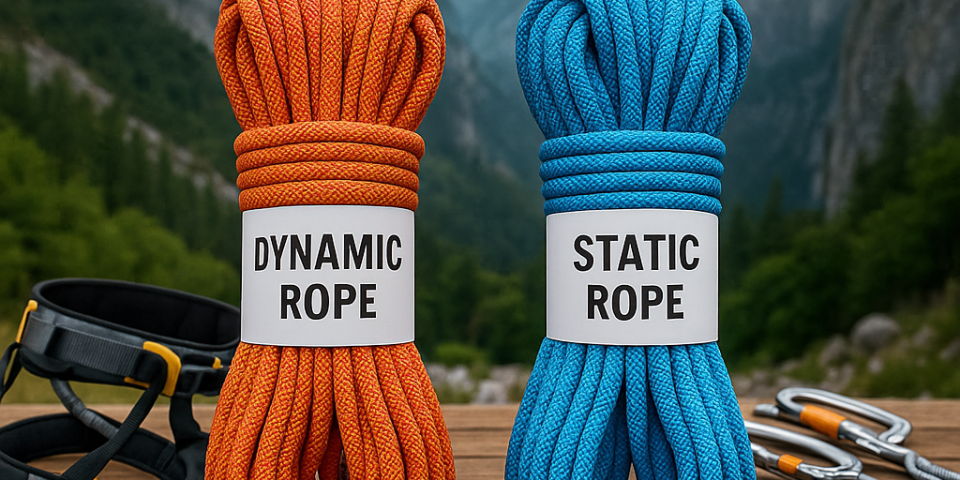
Dynamic ropes are designed to stretch and absorb the energy of a fall, making them ideal for lead climbing and belaying.
- Single ropes: Most common for sport climbing. Diameter usually ranges from 8.9–10.5mm.
- Half ropes: Used in pairs, clipped to alternating pieces of gear. Useful in alpine routes.
- Twin ropes: Clipped together into the same gear, offering redundancy and used for ice/mountaineering.
2. Static Ropes
Static ropes have minimal stretch and are used for rappelling, hauling gear, or working at height.
- Best for rope access, rescue operations, and caving
- Not suitable for fall arrest
Key Factors to Consider
1. Purpose of Use
| Activity | Recommended Rope Type |
|---|---|
| Sport Climbing | Single Dynamic Rope |
| Trad Climbing | Half or Single Dynamic |
| Big Wall Climbing | Static for hauling + dynamic for lead |
| Rope Access | Static Rope |
| Caving | Static Rope |
2. Diameter & Weight
- 8.9–9.5mm: Lightweight, ideal for performance and alpine climbs
- 9.6–10.2mm: Balanced durability and handling for sport climbing
- 10.3mm+: Durable, suitable for top-roping and beginners
3. Rope Length
- 60m is standard for most crags
- 70m+ for longer routes or repels
- For gyms, 30–40m is often sufficient
4. Sheath Proportion & Durability
Look for high sheath percentage for abrasion-heavy routes. Some brands note this in their specs (e.g., 40% sheath = very durable)
5. Dry Treatment
- Dry ropes repel water and are essential for alpine, ice climbing, and wet environments
- UIAA Dry Certified ropes absorb less than 5% of their weight in water
Rope Features to Look For
- Middle Mark / Bi-pattern: Easy midpoint identification for rappels
- UIAA Fall Rating: Measures how many factor-1.77 falls a rope can withstand
- Impact Force: Lower = less stress on climber and gear
- Elongation: Indicates stretch under load
Rope Maintenance Tips
- Avoid stepping on the rope – dirt can damage the sheath internally.
- Store it in a rope bag – protects against sun and abrasion.
- Check for soft spots or sheath slippage regularly.
- Retire rope if it has been involved in a major fall, is over 5 years old (heavy use), or shows visible damage.
Common Rope Buying Mistakes
- Buying static ropes for dynamic use
- Choosing too short of a rope for outdoor climbing
- Skipping dry treatment for alpine/ice climbing
- Ignoring fall rating and impact force
Bukibit’s Expert Picks
At Bukibit, we stock a carefully curated range of climbing and rope access ropes from top brands like Petzl, trusted by professional climbers and technicians worldwide. Whether you need a lightweight sport rope or a bombproof static line, we’ve got you covered.
Conclusion
The right rope is more than just a length of nylon—it’s your connection to safety. Choose wisely based on your activity, and always keep your rope clean, inspected, and stored properly. If you’re unsure, our team at Bukibit is here to help you pick the perfect rope for your needs.